Introduction: Why Freehold Ownership in Dubai Is a Game-Changer for Global Investors
Dubai has transformed into a global investment hub, and the big reason is freehold property Dubai laws.

These rules let foreigners own property outright in designated areas. That was not always the case. Today, you can own a villa, apartment, or land just like a local.
The numbers back up the buzz. Dubai allows 100% foreign ownership in freehold zones with no annual property tax and no capital gains tax. That means more of your profits stay in your pocket. Investors from India, the UK, and beyond are flocking here because of these advantages.
But here is the challenge. With so much information floating around, it is easy to feel lost. You need a clear, reliable guide to navigate the market. That is where we come in.
This guide gives you an actionable roadmap backed by current data and expert insights for 2026. Whether you want to buy real estate in Dubai for rental income or long-term growth, we cover the steps that work.
If you want expert help getting started, connect with Ayaz Salman for a free consultation. A trusted advisor can save you time and money.
Ready to learn more? Check out this data driven roadmap for foreign investors that walks you through the entire process.
What Is Freehold Property in Dubai? Understanding the Core Concept
Freehold property in Dubai is the closest you can get to outright ownership. In Arabic it is called Melkiah, which means complete and permanent rights over both the building and the land it sits on. There is no time limit. You can live in it, rent it out, sell it, or pass it on to your children. Your name is on the title deed at the Dubai Land Department, and that gives you full control.
The legal backbone for all this is Law No. 7 of 2006, also known as the Real Property Registration Law. Before that year, only UAE and GCC nationals could own property in Dubai. The law changed everything. It allowed foreigners to buy freehold property Dubai in specific zones approved by the Ruler. Today there are over 70 designated areas where you can own a home or land with no restrictions on time.
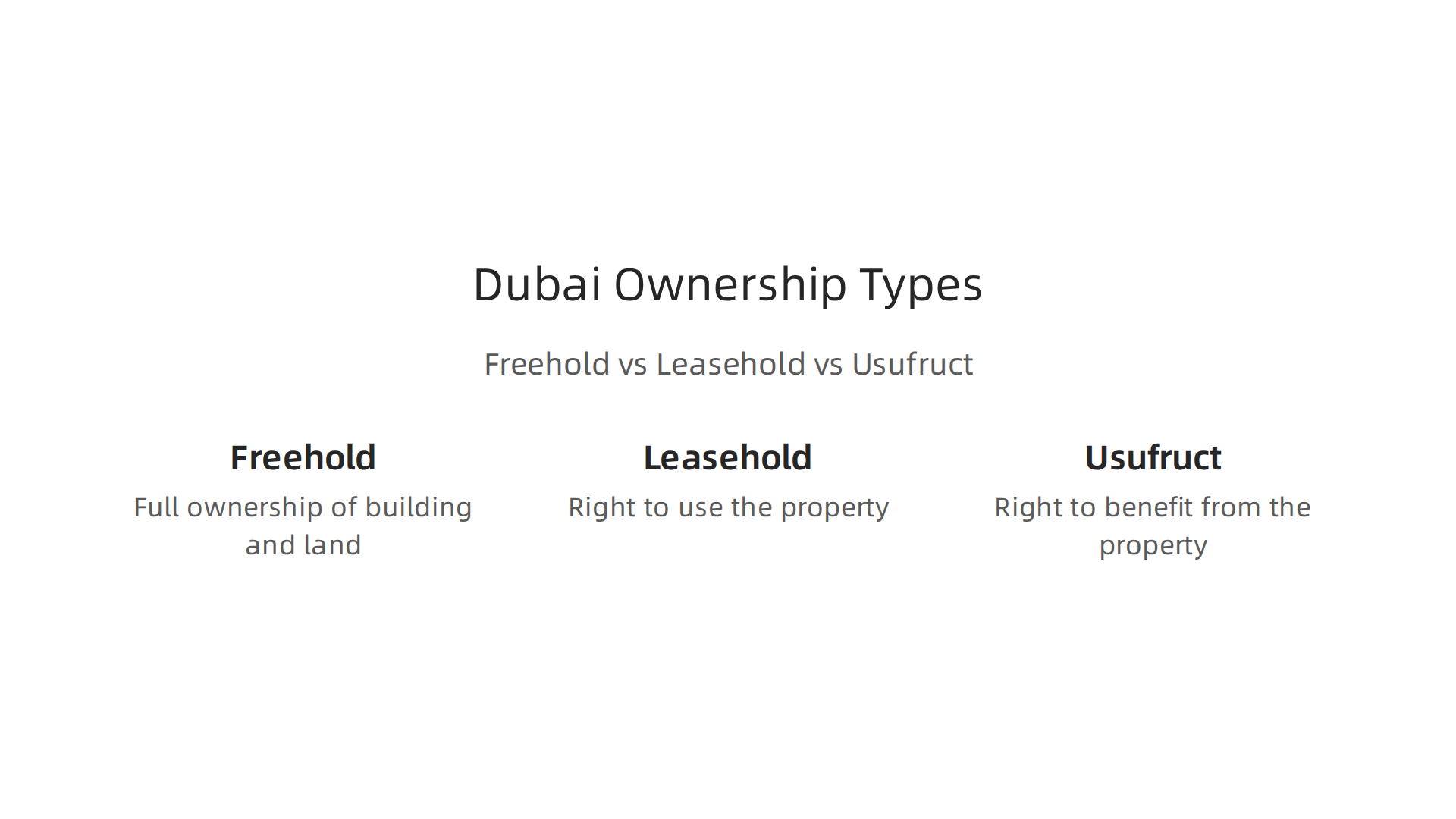
Here is a quick breakdown of what freehold means compared to other types of ownership:
| Ownership Type | What You Get | Time Limit |
|---|---|---|
| Freehold (Melkiah) | Full ownership of building and land | No time limit |
| Leasehold | Right to use the property | Up to 99 years |
| Usufruct | Right to benefit from the property | Up to 99 years |
A leasehold agreement gives you the right to occupy or rent out a property, but the land stays with the original owner. The same goes for usufruct, which is a right to use and profit from the property without owning the land. As one legal guide clearly explains, the key difference is that freehold owners get full legal authority to sell, mortgage, or transfer the property freely. Leaseholders only get the rights written into their contract.
Some of the most popular freehold zones include Dubai Marina, Downtown Dubai, Palm Jumeirah, Jumeirah Lakes Towers, and Arabian Ranches. These communities are well planned with schools, transport, and utilities. They were created specifically to attract international investors.
If you are new to how the local system works, you might want to check out this overview of the Dubai property market 2026 to see how freehold zones fit into the bigger picture.
Understanding these basics is the first step toward making a smart purchase. When you are ready to move forward, you can get FREE Dubai Real Estate Consultation by connecting with Ayaz Salman. A professional guide can help you choose the right freehold zone for your needs.
Who Can Buy Freehold Property in Dubai? Eligibility Criteria for Foreigners and Expats
One of the best parts about freehold property in Dubai is how open it is. You do not need to be a UAE resident or citizen to buy. This makes it one of the most accessible real estate markets for global investors.
So who exactly can buy private property? Foreign nationals from any country can purchase freehold property in designated zones.

The law clearly allows it. As one Dubai freehold ownership guide for foreign investors explains, foreign buyers can own property in over 30 specific freehold areas under Law No. 7 of 2006. You just need a valid passport. There is no minimum purchase price set by law. However, if you plan to buy real estate in Dubai with a mortgage, your visa status and down payment amount will matter to the bank.
What about buying through a company? Businesses can also acquire freehold assets for investment or staff accommodation. Foreign companies typically set up an offshore entity to buy property. An overview of UAE real estate law and foreign ownership rules confirms that companies can use vehicles like DMCC or JAFZA offshore companies to own freehold property in designated areas. This makes Dubai a strong choice for corporate real estate investment.
The rules are simple and designed to welcome foreign money. If you want a complete walkthrough of the steps, this step-by-step guide for foreigners buying property in Dubai covers everything from finding the right property to getting your title deed registered.
Top Freehold Areas in Dubai for Investment in 2026: Data-Driven Analysis
So you know the rules on who can buy freehold property. Now comes the fun part: picking where to put your money.

The best areas offer a mix of rental income and property value growth. Let’s look at the data for 2026.
Downtown Dubai and Dubai Marina are still the superstars. Downtown gives you prestige but lower rental yields around 5.73%. Dubai Marina delivers a better 6.18% on average for apartments, according to the latest average rental yields in Dubai for 2026 from Engel & Völkers. Palm Jumeirah is a top choice for luxury buyers, though yields are lower. JLT stands out with apartment yields hitting 7.17%. Dubai Hills Estate offers a balanced option with apartment yields at 6.35% and villa yields near 5%.
Other high-yield communities include Jumeirah Village Circle (JVC) at 7.43% and Dubai Silicon Oasis at 7.62%. These areas are popular with tenants and offer lower purchase prices.
But here is the thing. Newer zones are catching up fast. Dubai South is one to watch. Property prices are lower, and rental yields can go above 8%. Expo City is also gaining traction for long-term investors. These areas might not be the trendiest today, but they offer strong growth potential.
For a complete picture of where the market is heading, explore our Dubai property market 2026 data-backed insights and investment opportunities guide. It breaks down trends and opportunities in more detail.
Still not sure which area fits your plan? That is normal. You can speak with someone who knows the market inside out. Get a free consultation with Ayaz Salman, a Dubai real estate expert. He can help you match the right area to your investment style.
The Step‑by‑Step Process of Buying Freehold Property in Dubai
You have picked your area. Now let’s walk through the actual steps. The process is clear and safe if you follow the rules set by the Dubai Land Department (DLD) and the Real Estate Regulatory Agency (RERA).
Here is how it works.
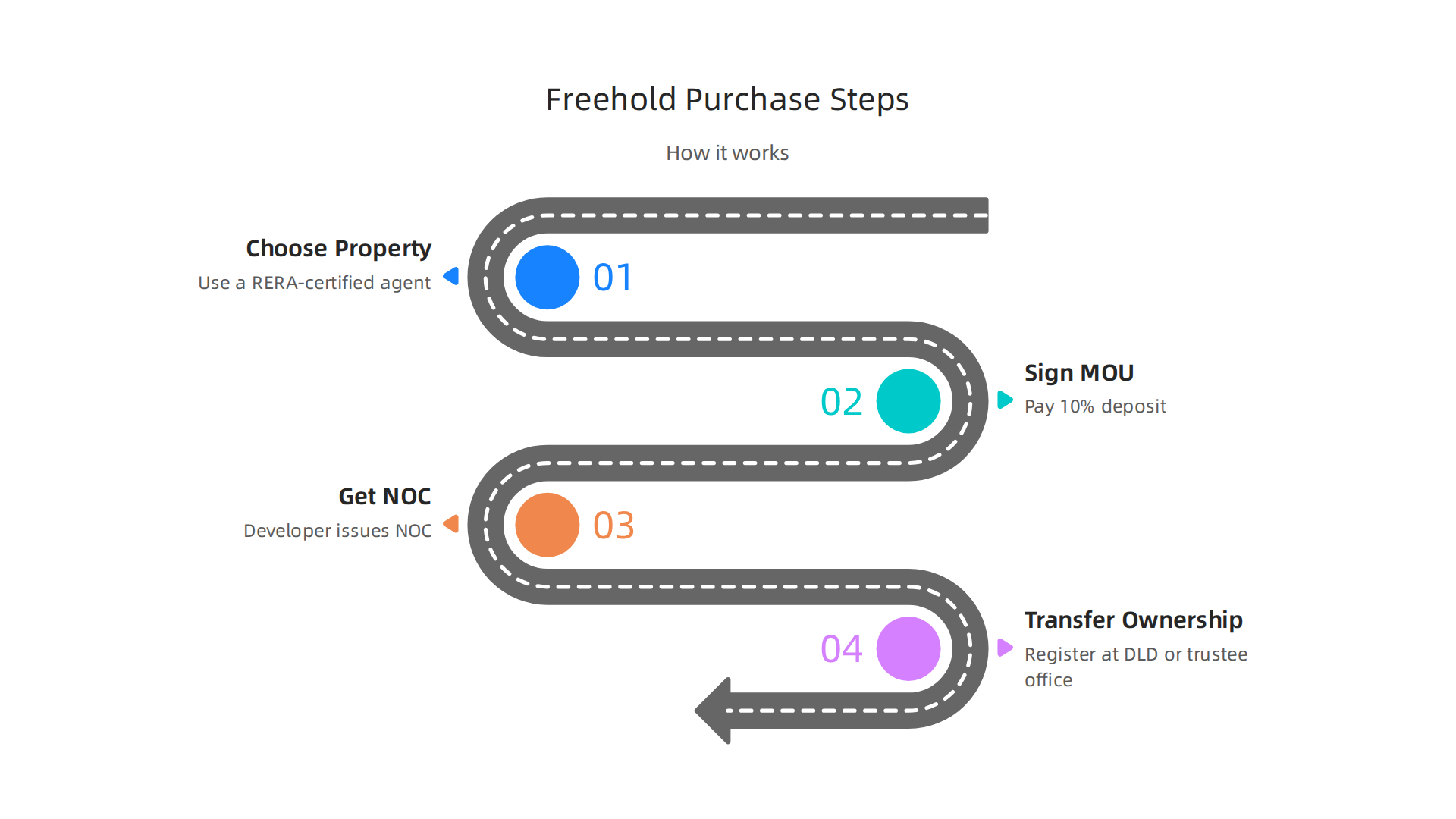
Step 1: Choose your property and work with a RERA‑certified agent.
A licensed broker will help you find the right unit, check the developer’s background, and confirm the market price. Always ask for their Broker Registration Number so you can verify them with the DLD.
Step 2: Sign the Memorandum of Understanding (Form F) and pay a deposit.
Once you agree on a price, both you and the seller sign an MOU. This contract outlines the purchase price, payment terms, and deadlines. You pay a 10% security deposit, which the broker holds in trust until the transfer. For off‑plan properties, you sign a Sales Purchase Agreement (SPA) instead.
Step 3: The seller gets a No Objection Certificate (NOC).
The seller must ask the developer for an NOC. This proves all service charges are paid and there are no legal issues. NOC fees range from AED 500 to AED 5,000 depending on the developer, as outlined in this step-by-step process to buy freehold property.
Step 4: Transfer ownership at the Dubai Land Department or a trustee office.
Both parties meet in person. You bring your passport, Emirates ID (if a resident), the signed MOU, the NOC, and two manager’s cheques – one for the property price and one for the DLD fee. The DLD charges 4% of the purchase price plus a AED 580 admin fee. After everything is checked, you get your title deed (for ready properties) or an Oqood registration (for off-plan units).
How long does it take?
A cash purchase usually takes 30 to 60 days. If you need a mortgage, add extra time for bank approval and paperwork.
Need a deeper dive?
The entire process is covered in this detailed guide: find property in dubai: a step-by-step guide for smart investors. It walks you through every document, cost, and timeline so you feel confident before you sign anything.
Off‑Plan vs Ready Freehold Properties: A Strategic Comparison for Investors
Now that you know the steps, it is time to think about what kind of freehold property dubai you want to buy. The two main choices are off‑plan and ready properties. Each one suits a different goal.
Off‑plan properties are units you buy before construction is finished. The developer sells them early, often at a lower price. You get flexible payment plans that stretch over the building period. When the project completes, market growth can give you instant capital gains. The trade‑off is risk. If the developer delays construction, your move‑in date slips. Always check the developer’s track record before you sign a Sales Purchase Agreement. You can learn more about how to buy real estate in dubai safely by reading this buying property in dubai as a foreigner in 2026 data‑driven roadmap.
Ready properties already exist. You can walk through them, inspect the finish, and see the neighborhood. You get immediate rental income if you lease it out, and you can move in or sell right away. The known condition removes the guesswork. The downside is a higher entry price and more exposure to market price fluctuations. If the market dips after you buy, your property value may drop in the short term.
Which one fits you?
If you have patience and want a lower starting cost with upside potential, off‑plan is your route. If you need cash flow now or prefer a safe, tangible asset, go with a ready unit. Both paths can build wealth. The key is matching your choice to your timeline and risk comfort.
Are you still unsure which option matches your investment goals? I can help you sort through the numbers. FREE Dubai Real Estate Consultation Buying, selling, renting, or investing in Dubai? Connect with Ayaz Salman for Free Consultation. We will look at your budget, your timeline, and your preferred area so you can move forward with confidence.
Maximizing Returns: Rental Yields and Capital Appreciation in Freehold Dubai
So you have decided to invest in freehold property Dubai. Now comes the big question: how do you actually make money? Two main ways exist: rental income and property value growth. Both can work together to build your wealth.
Rental yields in Dubai are strong. The average gross rental yield across the city sits around 6.68% as of April 2026, according to the latest data from Engel & Völkers. Apartments perform even better, with average yields of 7.15%. Compare that to cities like London or Hong Kong, and Dubai clearly wins. Some communities stand out. Dubai Investments Park offers yields of 8.53%. Dubai Silicon Oasis hits 7.62%. Jumeirah Village Circle reaches 7.43%. These numbers mean your investment can pay for itself faster than in most global markets.
Capital appreciation adds another layer. Dubai’s population keeps growing. It passed 3.8 million residents in 2025. Infrastructure projects like new metro lines and the Expo legacy areas attract more people and businesses. More demand pushes property values up. Areas still in development, such as Dubai Creek Harbour and Dubai South, offer strong growth potential when they mature.
How can you boost your returns? You have three simple strategies.
-
Choose the right unit size. Studios and one-bedroom apartments typically give higher rental yields than larger units. If cash flow matters most, start small.
-
Renovate smartly. A fresh coat of paint, new fixtures, or modern flooring can raise your rent and your property value without a huge cost.
-
Time your entry. Buying during slower market periods or in up-and-coming neighborhoods often gives you a lower purchase price and more room for growth.
For a deeper look at the numbers behind these trends, read this Dubai property market 2026 data-backed insights guide. It will help you see which areas and property types match your return goals.
Remember, freehold property in Dubai gives you both income and appreciation. Pick the right area and unit, and you set yourself up for solid long-term gains.
Navigating Regulations: Key Legal Frameworks and 2026 Updates for Freehold Property
Understanding the rules protects your investment. Dubai’s freehold system has clear laws that give you confidence as a buyer.
The foundation is Law No. 7 of 2006. This law created designated areas where foreigners can own property fully, just like locals. Periodic updates have made the system even safer for investors over the years.
RERA (Real Estate Regulatory Agency) is your watchdog. This government body oversees everything from developer licensing to advertising rules. One of the most important protections is the escrow account system. When you buy an off-plan property, your money goes into a special trust account. The developer can only access those funds after reaching construction milestones, verified by independent engineers. This rule prevents fraud and project delays. For a complete overview of how these protections work, check out this Dubai real estate laws and regulations 2026 guide.
Big changes arrived in 2025 and 2026. First, service charge regulations were updated to give owners more transparency about what they pay for building maintenance and amenities. Second, the visa rules tied to property ownership changed. Here is the simple breakdown:
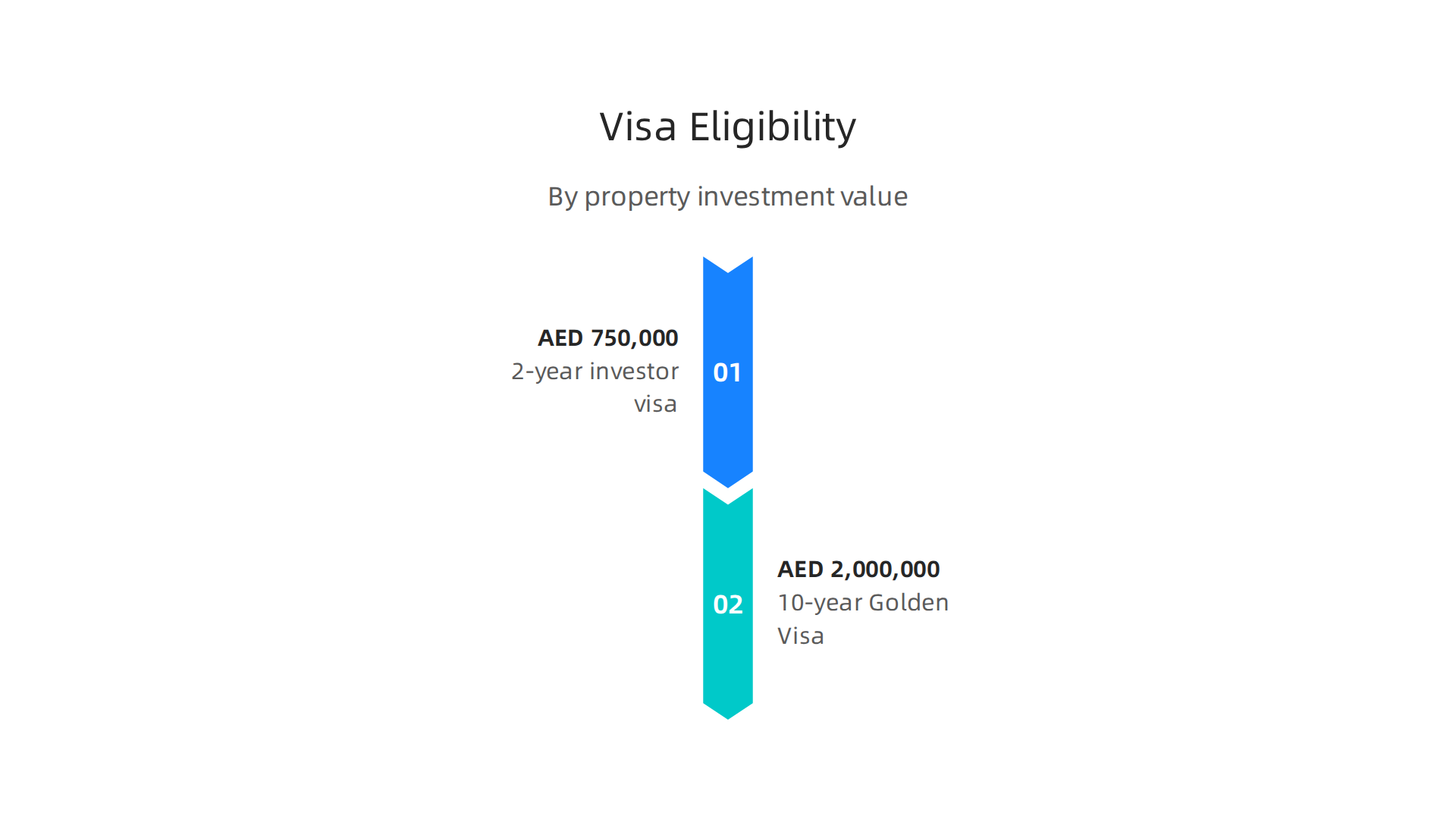
| Property Value | Visa Eligibility |
|---|---|
| AED 750,000 or more | 2-year investor visa |
| AED 2,000,000 or more | 10-year Golden Visa |
These visa options make buying freehold property Dubai even more attractive if you want to live here or have a long-term base.
If you are new to this market, reading this guide to buying property in Dubai as a foreigner will walk you through every step of the legal process.
Still have questions about the rules? You can get a FREE Dubai Real Estate Consultation to clarify anything that feels confusing. A few minutes with an expert can save you from costly mistakes.
Common Pitfalls When Buying Freehold Property in Dubai and How to Avoid Them
Even smart buyers slip up sometimes. Knowing the most common mistakes before you start can save you time, money, and stress.

Here are three traps to watch for when you buy freehold property in Dubai and how to steer clear of them.
Pitfall 1: Skipping developer background checks
Buying off-plan from an unverified developer is risky. Some developers have poor track records with delays or quality issues. Always check if the developer is registered with RERA and whether their project has a proper escrow account. Your money should only go into a RERA-approved trust account, not directly to the developer. Without this protection, you could lose your deposit if the project stalls. The RERA Dubai 2025 guide explains exactly how escrow accounts safeguard your payments.
Pitfall 2: Ignoring the hidden costs
The purchase price is just the start. Many first-time buyers forget about service charges, municipality fees, and ongoing maintenance costs. These fees vary by community and building. A luxury tower in Dubai Marina will have higher service charges than a villa in Dubai South. Before you commit, ask for a full breakdown of annual costs. Factor these into your budget so there are no surprises later.
Pitfall 3: Not getting proper legal help
Some buyers try to handle everything alone to save money. That is a mistake. The sales agreement is full of legal details that can trap you if you miss a clause. Hire a lawyer who knows Dubai property law to review the contract before you sign. They will check for things like payment schedules, handover dates, and penalty clauses. A few hundred dirhams on legal fees now can save you thousands later.
If you want a complete walkthrough of the buying process, check out this find property in Dubai guide to make sure you cover every detail.
Avoid these three pitfalls, and your journey to owning freehold property Dubai will be much smoother.
Summary
This article explains how freehold property in Dubai gives foreigners full, permanent ownership in designated zones and why that matters for global investors in 2026. It walks through the legal foundation (Law No. 7 of 2006), who is eligible to buy, and common ownership structures including corporate purchases. The guide compares the best freehold communities with current rental yields and growth prospects, and it explains the practical buying steps—from working with a RERA agent and signing the MOU to obtaining the NOC and registering the title deed at the Dubai Land Department. You’ll also get a clear comparison of off‑plan versus ready properties, tactical tips to boost returns, recent regulatory updates including visa thresholds, and the typical pitfalls to avoid. After reading, you’ll understand where to look, how the transaction works, what costs to expect, and how to decide which property type fits your goals, plus where to get a free consultation if you need expert help.